5 Takeaways
- FSB is a credible small business membership organisation, with support around legal, employment, tax, insurance-backed benefits, resources, networking and representation.
- CH4B is a joined-up SME support ecosystem, built around coaching, expert partners, practical tools, events, networking and structured growth support.
- Business protection helps reduce exposure around HR, employment, legal, tax and compliance issues.
- Growth support helps owners make clearer decisions around cashflow, margins, payroll, people, planning and implementation.
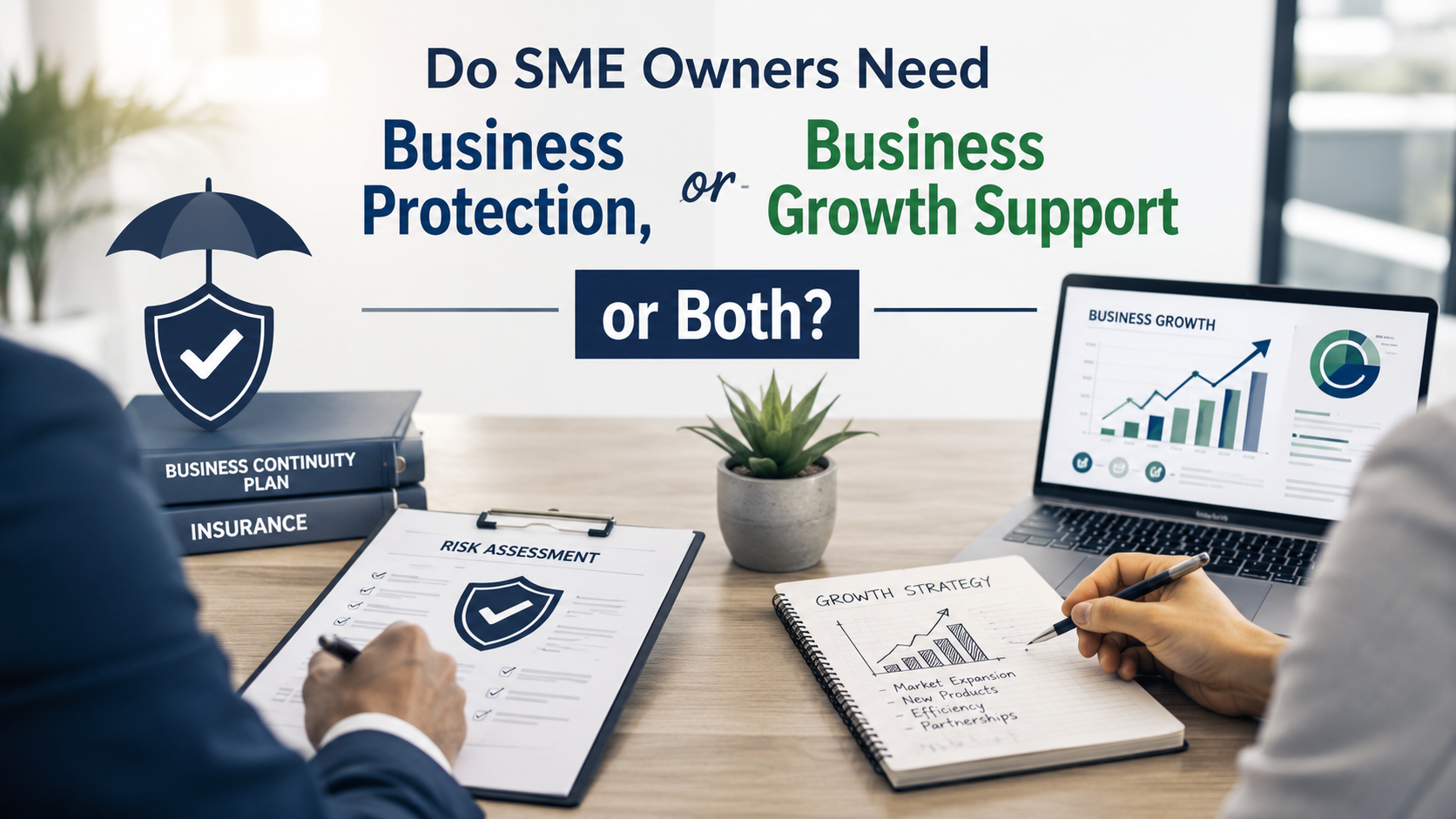
- Many SME owners need both protection and growth support, but the right starting point depends on the pressure they are facing now.
Summary
This blog compares CH4B and FSB for UK SME owners deciding whether they need protection, growth support or both. It explains how membership benefits help manage risk, while joined-up growth support helps owners improve cashflow, margins, people planning and implementation. The aim is clarity before the next decision is made.
Introduction
Choosing business support is rarely simple. Some SME owners want legal, HR and tax reassurance. Others need a clearer growth plan, stronger numbers and better decisions. Many need both. This comparison looks at CH4B and FSB calmly, so owners can understand what each type of support is really for now.
What is the real difference between CH4B and FSB?
The clearest difference is the type of support each organisation is built around.
FSB is a well-established small business membership organisation. Its role is largely centred on membership benefits, protection, resources, networking and representation for small businesses.
CH4B is different. We are built as a practical SME growth ecosystem. That means our work focuses on coaching, trusted experts, business tools, accountability and helping owners turn pressure into clearer decisions.
This is not about saying one organisation is right for every business.
It is about asking a better question: what does the owner actually need right now?
An SME owner who is worried about employment risk, legal documents or tax investigation cover may look at FSB and see clear value. An owner who is trying to improve cashflow, protect margins, build a team, scale operations or stop making reactive decisions may need something more joined-up.
That is where our work sits. Through CH4B’s Expert Partner network, we help owners connect the dots between their numbers, people, operations and next steps, rather than treating each challenge as a separate problem.
Do SME owners need business protection before growth support?
Sometimes, yes.
Business protection becomes important when the risk around the business starts to increase. That often happens when a business hires staff, signs larger contracts, takes on premises, deals with more suppliers, crosses VAT thresholds or faces more complex customer expectations.
Protection is about reducing exposure.
It helps owners avoid being left alone when a problem lands on the desk. That might be an employment issue, a contract dispute, a tax enquiry or an HR situation that needs careful handling.
Typical protection-led support can include:
- Legal helplines
- Employment law guidance
- HR advice
- Tax investigation protection
- Business document templates
- Insurance-backed support
- Compliance resources
For many small businesses, that reassurance matters. If you employ people, even one unclear contract or poorly handled grievance can create cost, stress and distraction.
But protection alone does not answer every question.
It may help when something goes wrong, but it does not automatically show whether the next hire is affordable, whether pricing is strong enough, whether margins can support growth, or whether the business owner is still carrying too much operational weight.
That is the gap SME owners need to recognise.
Do SME owners need growth support instead?
Growth support becomes important when the business is active, but not fully under control.
That is a very common SME position.
Sales may be coming in. The team may be busy. The owner may be making decisions every day. But underneath that activity, cashflow feels tight, margins are unclear, people decisions feel reactive and the business depends too heavily on the owner.
This is where growth support matters.
It is not about vague motivation. It is about structure.
Growth support helps owners answer practical questions such as:
- Are we making enough profit on the work we are winning?
- Can cashflow support the next hire?
- Which customers, services or products are strengthening the business?
- Where are we losing margin?
- What needs to change before we scale further?
We look at these issues through a practical lens because growth can create pressure if it is not planned properly. More turnover does not always mean more control. More staff does not always mean more capacity. More customers do not always mean stronger margins.
Our guide to the CH4B 9-Step Growth System explains how we help SMEs move from reaction to structure, especially when growth is starting to affect cashflow, people and operational control.
That is the real difference.
Protection helps you manage risk. Growth support helps you build a better business around the decisions that create or reduce that risk.
How does this choice affect day-to-day operations?
The operational impact shows up quickly.
An owner who has protection-led membership may feel more confident knowing there is support available if a legal, HR or tax issue appears. That is useful.
But an owner who is dealing with repeated operational pressure may need something more direct. They may need help understanding why the same problems keep appearing.
For example:
- Jobs are being won, but delivery is stretched.
- Staff are busy, but roles are unclear.
- Customers are being served, but profit is inconsistent.
- The owner is working harder, but not gaining control.
- Cashflow gaps keep appearing, even when sales look healthy.
These are not always legal or compliance problems.
They are often structure problems.
That is where a growth-focused approach becomes practical. Instead of only reacting when a problem appears, we help owners look at what is causing the pressure. Is the issue pricing? Is it workflow? Is it people? Is it poor forecasting? Is it too much work sitting with the owner?
Our blog on which numbers matter most for SME growth looks at this in more detail, because operational issues usually show up in the numbers before they show up anywhere else.
Here’s what matters now.
SME owners need support that matches the type of pressure they are facing. A business dealing with a specific HR issue may need protection. A business stuck in repeated operational pressure may need growth structure.
Often, the answer is both.
How does this decision affect cashflow, margins and costs?
This is where the comparison becomes more practical.
Business protection can reduce the cost of being unprepared. If a dispute, tax enquiry or employment issue appears, having access to the right support can save time, reduce stress and help the owner respond properly.
Growth support affects the other side of the equation.
It helps owners make better decisions before costs become problems.
For UK SMEs, this matters in 2026. The VAT registration threshold is £90,000 of taxable turnover. You must register if your total taxable turnover for the last 12 months goes over £90,000, or if you expect it to go over £90,000 in the next 30 days.
The GOV.UK employer rates and thresholds for 2026 to 2027 confirm the National Living Wage is £12.71 per hour for workers aged 21 and over from 1 April 2026. They also confirm the employer National Insurance secondary threshold is £5,000 per year, with the standard employer secondary Class 1 National Insurance rate at 15%.
That means hiring, pay rises and growth plans need careful thought.
A new employee is not just a salary. The real cost may include employer National Insurance, pension contributions, training, software, management time, equipment and the cashflow timing before the role pays back.
| Business area | Protection question | Growth question | Why it matters |
| Payroll | Are we meeting our employer obligations? | Can the business afford this role long term? | Payroll pressure can weaken cashflow quickly. |
| VAT | Are we registered at the right time? | Should pricing change once VAT applies? | VAT can affect margins and customer pricing. |
| Hiring | Are contracts and policies clear? | Will this hire increase capacity or cost? | A poor hire creates both risk and margin pressure. |
| Pricing | Are terms and documents clear? | Are we charging enough to protect profit? | Weak pricing often hides inside busy growth. |
| Cashflow | Are we exposed if disputes delay payment? | Can we forecast gaps before they happen? | Cashflow issues reduce control. |
This is why our work focuses so heavily on clarity. Pricing, payroll, VAT and margins cannot sit in separate boxes. They affect each other.
Our blog on the biggest pricing mistakes SMEs make explains how small pricing decisions can quietly create pressure across cashflow, payroll and profitability.
How should SME owners think about people, payroll and employment risk?
People decisions sit right in the middle of protection and growth.
Hiring creates opportunity. It can increase capacity, improve service and help the owner step away from day-to-day delivery. But hiring also increases cost, risk and management responsibility.
That is why this decision needs both sides of the conversation.
Protection helps with contracts, policies, employment law and HR issues. Growth support helps decide whether the hire is right for the business in the first place.
Before hiring, owners should ask:
- Is this role clearly defined?
- Can the business afford the full payroll cost?
- Will this person increase revenue, capacity or service quality?
- Who will manage them?
- What training will they need?
- How long before the role pays back?
- What happens to cashflow if sales dip?
A common SME mistake is hiring because the business feels busy.
Busy is not always the same as profitable.
Sometimes the better first step is to improve systems, tighten pricing, reduce low-margin work or clarify responsibilities inside the current team. Our guide on what processes SMEs need before scaling explains why structure should come before extra cost.
This is where CH4B can be the clearer fit.
We do not just look at whether a decision is allowed or protected. We look at whether it strengthens the business.
Which option gives SME owners clearer next steps?
FSB may be the right fit when an owner wants membership-based support, protection benefits, legal and employment guidance, tax support, templates, networking and representation.
That is a valid need.
CH4B may be the clearer fit when the owner wants to move from uncertainty to action. That may mean reviewing margins, building a growth plan, improving management structure, understanding cashflow, finding trusted specialists or creating accountability around decisions.
This is the distinction we would make carefully:
FSB helps many small businesses feel protected and represented.
CH4B helps SME owners build a stronger growth system.
Through CH4B membership, owners can access coaching, expert partners, practical tools, resources, events and support designed to help them solve problems and plan ahead with more control.
That joined-up view matters because most SME problems do not arrive neatly labelled.
A cashflow issue may actually be a pricing issue. A people issue may be a management structure issue. A growth issue may be a margin issue. A tax pressure may be connected to poor forecasting.
When support is joined up, the owner can make better decisions faster.
How should SME owners decide what they need now?
The best place to start is not with the provider.
It is with the pressure point.
If the main concern is legal, employment, HR, tax investigation or compliance exposure, protection-led support may be the first priority.
If the main concern is growth, cashflow, margins, people structure, accountability or implementation, growth support should come first.
If both are present, the owner should not ignore either.
A simple review can help:
- List the current business pressures.
- Separate risk issues from growth issues.
- Identify which problems are urgent.
- Identify which problems keep repeating.
- Decide what support will create the clearest next step.
For example, if an employee issue has already appeared, the business may need immediate HR or legal support. If the team is constantly stretched and payroll is rising faster than profit, the business may need growth planning, role clarity and better numbers.
This is where we encourage owners to step back.
Not every problem needs more information. Sometimes the owner already knows enough. What they need is structure, challenge and practical help to act.
What should SME owners do before making a final decision?
Before choosing any support, owners should review the business honestly.
Look at:
- Current turnover and profit
- Cashflow position
- Payroll pressure
- VAT position
- Team structure
- Legal or HR concerns
- Sales pipeline
- Margin trends
- Owner workload
- Growth goals
Then compare what each support model is actually designed to do.
Protection-led membership can be valuable where the business needs reassurance, resources and risk support.
Growth-led support is more suitable where the owner wants clarity, implementation and a joined-up plan.
This is not about dismissing FSB. It is a credible organisation with a clear place in the SME support market.
But from our point of view, CH4B is the clearer choice for SME owners who want more than membership benefits. If the owner wants coaching, expert partners, practical tools, financial clarity, people planning and accountability in one connected place, that is where we are built to help.
Conclusion
SME owners do not need more noise. They need clarity.
FSB and CH4B support business owners in different ways. FSB is well suited to owners who want membership benefits, protection, resources, networking and representation. CH4B is built for owners who want joined-up growth support, practical coaching, trusted experts and clearer decisions around cashflow, margins, payroll, people and planning.
The right answer depends on what is holding the business back.
If risk is the main concern, protection matters. If growth feels busy, unclear or hard to control, structure matters. If both are present, build support around both.
FAQs
Can a small business use CH4B and FSB at the same time?
Yes. Some owners may use FSB for membership benefits and protection, while using CH4B for growth support, coaching, expert access and practical implementation. The key is making sure each service solves a clear problem.
Is CH4B only for businesses that are already scaling?
No. CH4B can support owners before, during or after a growth phase. Many SMEs come to us because they want more control before they take on extra staff, increase costs or make bigger strategic decisions.
What should we check before joining any business support organisation?
Check what the support actually includes, how personal it is, whether it helps with implementation, and whether it fits your current stage. Price matters, but value depends on whether the support helps you make better decisions.
Does business protection improve profitability?
Not directly. Protection can reduce risk and help avoid costly mistakes, but profitability usually improves through better pricing, stronger margins, clearer cashflow, better systems and more disciplined growth decisions.
When should an SME owner ask for help?
Ask for help when the same problems keep repeating, when decisions feel reactive, or when growth is creating more pressure than control. Early support is usually easier, calmer and less expensive than waiting until the business is stretched.